The Sector
Why associations merge, and why members sometimes say no
.jpg)
Sooner or later, if you chair a membership body or run one, the conversation arrives. A counterpart chair phones, or a council member raises it after the formal business: should we be talking to the institute next door? The question is rarely comfortable and rarely premature. The UK’s membership sector was built by merger, it is consolidating again now, and the difference between the mergers that strengthened a profession and the ones that died in a members’ ballot is something boards should understand before the phone call, not after.
UK associations merge when dues pressure, duplicated costs and overlapping remits make two bodies weaker than one. The pattern runs from the Victorian accountancy institutes to the ICAEW and CIPFA merger talks opened in July 2025. Mergers fail when members read them as identity loss or takeover: the case must be won with the membership, not the boardroom.
Why do membership bodies merge at all?
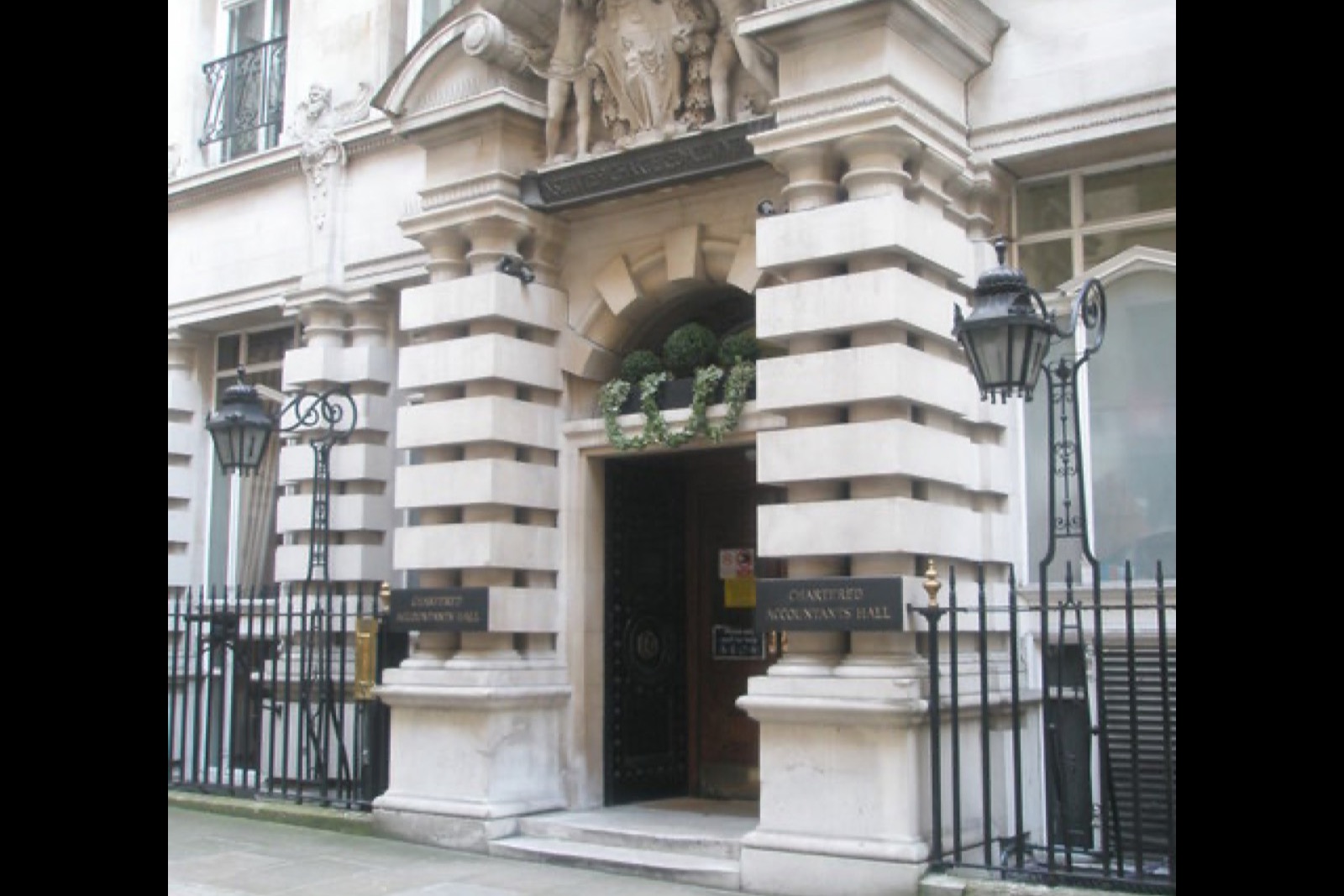
Because fragmentation is expensive and professions do not stay still. The accountancy profession shows the pattern at its purest. The Institute of Chartered Accountants in England and Wales was itself a consolidation, chartered in 1880 from five separate city institutes that had each concluded that a local body could not set national standards. It merged again in 1957 with the Society of Incorporated Accountants. The Royal Society of Chemistry was created in 1980 from four predecessor societies. The large, chartered, national body that looks like a fixture of British professional life is usually the residue of several smaller ones that chose to combine.
The drivers have not changed much since 1880, only their relative weight. Duplicated back-office cost is the oldest: two chief executives, two finance functions, two databases, two sets of governance, serving memberships that increasingly overlap. Then comes the dues ceiling. Subscriptions are politically hard to raise, and a body of 8,000 members faces the same digital expectations (a modern website, a functional CRM, an events programme that looks professional) as a body of 80,000, without the income to meet them. Regulator pressure plays a role in the chartered professions, where oversight bodies favour counterparts with the scale to regulate competently. And underneath it all sits remit overlap: when three institutes claim the same profession, employers and government stop knowing whom to call.
What is driving the current round?
The arithmetic of decline meeting the cost of modernity. ASAE’s sector research, covered in our state of the sector analysis, finds roughly four in ten chief executives reporting financial decline against one in ten reporting improvement, with retention the top challenge. Bodies that cannot grow tend to merge; that has been true since the Victorian institutes.
The most instructive live example is accountancy, again. On 30 July 2025 the ICAEW and CIPFA signed an agreement to explore a merger, citing the need for scale, resilience and complementary strengths across private and public sectors. By spring 2026 the process had already hit the two classic friction points. The ICAEW indicated its members would not need to vote, since its constitution would be unchanged, a reading that prompted open scepticism in the trade press. And in May 2026 CIPFA postponed its own member ballot, citing the time due diligence and regulatory approvals were taking. Twenty years on, the same two institutes are testing whether the arithmetic has finally beaten the identity.
Why do members vote mergers down?
Because a merger asks members to dissolve something they belong to, and belonging is not a line item. The 2005 ballot between the same two bodies remains the sector’s cautionary text. Accountancy Age reported that 65.7% of voting ICAEW members backed the merger, fewer than 600 votes short of the 66.7% majority the motion required, on a turnout of 56,326. CIPFA’s members had voted 86.6% in favour. One side’s membership emphatically wanted it; the other side’s narrowly declined to dissolve itself, and that was the end of it. Earlier attempts tell the same story from further back: a six-way accountancy merger collapsed in 1990 before reaching a vote, and an ICAEW and CIMA combination failed in 1995 before ever being put to members.
Three failure modes recur. Identity loss is the largest: members of the smaller body, or the prouder one, conclude that their letters, their history and their community are being traded for head-office economics, and they vote accordingly. Ballot mechanics matter more than boards expect: supermajority requirements mean a merger can command a landslide and still fail, as 2005 demonstrated. And then there is the takeover problem, where the rhetoric says merger but the heads of terms say absorption. Members can tell. A deal in which one name, one headquarters, one chief executive and one council culture survive intact will be read as an acquisition, and priced as one in the ballot.
A merger can command 65.7% support and still fail. Boards should learn that arithmetic before they learn it in public.
When is a merger really a takeover?
Almost always, to some degree, and candour about that improves outcomes. Mergers between equals are rare because equals are rare. One body usually brings the larger membership, the stronger reserves or the working technology stack, and the merged organisation tends to run on its systems and its culture. The question is whether the smaller partner’s distinct value, its specialism, its public sector franchise, its regional reach, is genuinely preserved or merely acknowledged in the press release.
The deals that work treat that distinct value as the reason for the merger and protect it structurally: named divisions, guaranteed representation, ring-fenced services. The deals that fail treat the smaller body as a revenue line to be integrated away. Members vote on which of the two they believe they are looking at, and they are usually right.
What should boards ask before opening talks?
Four questions, in my experience, separate sound processes from expensive wounds. First: what precisely can we not afford to do alone, and is merger the only route to it? Shared services, joint qualifications and confederation solve many of the same problems at a fraction of the constitutional risk. Second: what do our members get that they cannot get now, stated in their terms rather than ours? “Scale” is a board answer; “a qualification employers recognise in more countries” is a member answer. Third: what are we each prepared to lose? If either side’s private answer is nothing, there is no deal, only a contested takeover. Fourth: what is the ballot threshold, and what does the private polling say? A board that cannot carry its membership should not start, because a defeated public ballot damages both bodies for a decade.
The current ICAEW and CIPFA process, tracked in our merger ballot coverage, will answer its own version of these questions by the autumn. Every other board contemplating the same conversation should watch how the membership is courted, not just how the heads of terms read. Our analysis of the regulator and the member body covers the structural pressure regulators add; the volunteer leadership pipeline analysis covers the governance capacity a merger process consumes. Both are part of the same boardroom arithmetic.
- Consolidation is the sector's historical norm, not a sign of failure: the question for trustees is whether scale buys members something they cannot otherwise have.
- A merger is won or lost in the membership, not the boardroom; supermajority ballots can defeat deals with two-thirds support, as ICAEW members showed in 2005.
- Before opening talks, test the alternatives (shared services, joint qualifications, confederation) and agree what each side is prepared to lose.