The Sector
The volunteer leadership pipeline is narrowing. What works
.jpg)
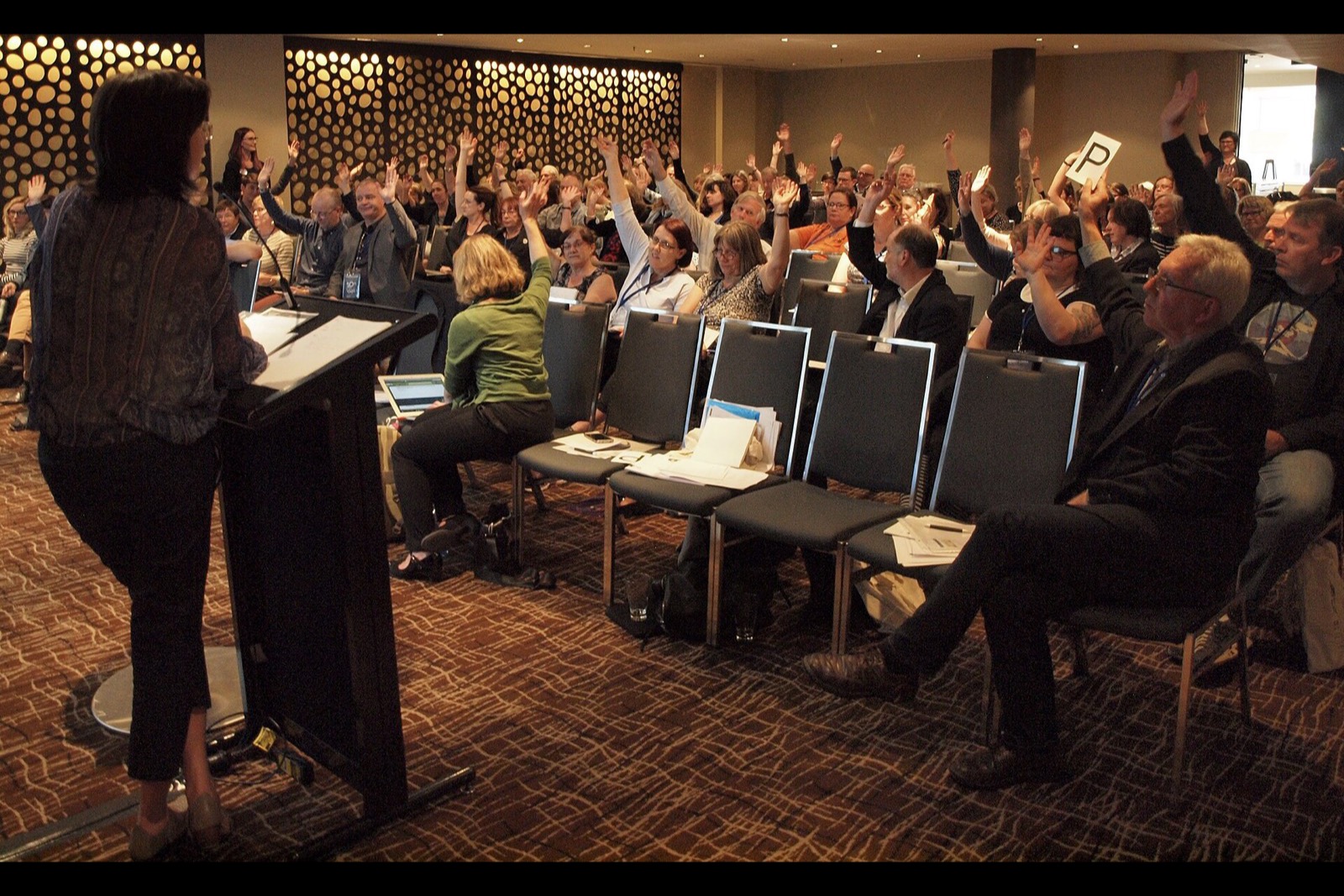
Every chief executive of a membership body knows the moment. The nominations round opens for council, or a committee chair steps down after six years, and the organisation discovers that the shortlist is a list of the usual names, or no list at all. The member body is an unusual institution in that it is governed by its own customers, and that tradition is under measurable strain. The strain is not sudden, and it is not uniform, but any board that has not looked at its volunteer pipeline as a strategic risk is behind the evidence.
UK membership bodies run on volunteer leadership: trustees, council members, committee chairs and the presidency chain. That pipeline is narrowing as fewer members volunteer for organising roles, time commitments lengthen and boards skew older. The fix is structural: defined terms, accurate workload accounting, open recruitment alongside the representative tradition, and succession planning that treats the presidency as a development track.
Why does the volunteer pipeline matter more than headcount?
Because governance is the one function a membership body cannot buy in. Staff can be hired, venues can be rented, services can be outsourced. Legitimacy cannot. The British membership tradition, older than the modern charity sector, holds that the profession or community governs itself: members elect the council, the council supplies the trustees, the senior volunteers chair the committees, and the president embodies the whole chain for a year or two. When the pipeline narrows, what thins out is not volunteer labour but the institution’s claim to be member-led.
The tradition is old. The Victorian institutes and the learned societies were committee-run from the start; the president’s chain of office, the annual dinner where the gavel passes, the council table with its regional seats, all of that is the 19th century still at work in 2026. It survived two world wars and the professionalisation of association management. What it has not yet survived is a membership that no longer has the hours.
What does the research say is happening?
Two things at once, and boards should hold both. NCVO’s Time Well Spent 2023 survey, the latest in its national research series on the volunteer experience, found satisfaction among recent volunteers at 92%, down from 96% in its first survey in 2019, which drew on responses from more than 10,000 adults across Great Britain. Volunteering is not collapsing in enthusiasm; it is thinning in organisational commitment. The same research found the share of people organising or helping to run an activity had halved, from 14% to 7%. That category, the organising and running tier, is precisely the tier from which committee members, council members and future presidents are drawn.
The age profile sharpens the picture. The Young Trustees Movement puts the proportion of charity trustees aged under 30 at around 1%, against a sector whose decisions shape the working lives of people at every age. Membership bodies are not charities in every case, but their governance draws from the same national pool of people willing to serve unpaid, and it draws disproportionately from the retired end of it. A council whose youngest member is 52 is not representative of the profession it governs; it is representative of the profession as it was.
The share of people organising or helping to run an activity has halved, from 14% to 7%. That is the pipeline, in one statistic.
Why is the presidency chain under particular strain?
Because it was designed for careers that no longer exist. The classic track runs from branch committee to national committee to council to honorary officer to president, a decade or more of service culminating in a year that can demand two or three days a week. That track assumed an employer who saw the presidency as an asset, a career plateau that freed the late fifties for service, and a spouse or diary that absorbed the cost. All three assumptions are weaker now. Employers are less patient, portfolio careers are commoner, and the year itself has grown: more regulatory business, more member communication, more media.
The consequences show up at both ends. At the entry end, mid-career members decline committee places because the time accounting is hidden and the return is vague. At the top end, organisations sometimes find the presidency filled not by the strongest successor but by the last person still standing. A presidency that goes to whoever can spare the time, rather than whoever should hold the office, is the pipeline’s failure made visible.
Representative or skills-based: which should boards pick?
The framing is a false one, and the bodies treating it as a real choice get into trouble. Pure representation delivers councils that mirror the membership’s regions and sectors but may lack, at any given moment, the financial, digital or regulatory skills the board agenda demands. Pure skills-based recruitment delivers competence at the price of the member-led legitimacy that is the whole point of the institution.
The workable settlement, now common in the better-governed bodies, is a mixed board: elected members carry the representative mandate, openly recruited co-opted members fill defined skills gaps, and a nominations committee manages both against a published matrix of what the board needs. The Charity Governance Code’s insistence that diversity of background and experience makes for better decisions applies to membership bodies as much as to charities, and the Young Trustees Movement’s argument deserves a straight hearing: boards make better decisions when the people affected by them are in the room. Appointing a 28-year-old member to council is not tokenism. It is succession planning with a longer horizon.
What does a healthy pipeline look like?
Boring, visible and deliberate. Terms are defined and honoured, three or four years with a clear endpoint, so that service has an exit as well as an entry and seats turn over without funerals or rows. Workload is stated accurately at recruitment: the days per year, the meeting pattern, the preparation, so that people accept with open eyes and stay. Succession is mapped two or three offices deep: the organisation knows who the plausible vice-chairs are in five years’ time and is giving them the committee experience now that the role will require. And the presidency is treated as the last stage of a development track, with media training, governance support and a chief of staff function, rather than a prize awarded for endurance.
None of this requires constitutional revolution. It requires the nominations committee to behave like a talent function rather than a telephone tree, and it requires the board to review its own pipeline annually with the same seriousness it gives the reserves policy. Our analysis of why associations merge shows what governance exhaustion costs when it goes unmanaged; the regulator and member body analysis shows why competent member governance is now a regulatory expectation, not a nicety. The membership model briefing covers the engagement base from which volunteers are recruited.
Start with one number at the next board meeting: the average age of the last five people elected to council, against the average age of the membership. If the gap is more than a decade, the pipeline is already telling you what the next five years look like.
- Volunteer leadership is the institution's legitimacy, not free labour: report the pipeline to the board annually as a strategic risk with named owners.
- Define terms, state workloads plainly and plan succession two offices deep; a presidency that goes to the last person standing is a governance failure.
- Combine elected representation with openly recruited skills seats, and treat trustees under 30 as succession planning, not outreach.